
Micro-Horror Games in Vietnam (Part 2): User Acquisition Creatives, Localization Opportunities, and Market Expansion Strategies
A strategic analysis covering category growth, gameplay mechanics, creative and user acquisition frameworks, and the localization potential within the Vietnamese market.
Why do micro-horror creatives have such a natural advantage in performance advertising? How differently might Vietnamese and Chinese players respond to familiar local environments such as shared dormitories, aging apartment buildings, or regional urban legends? And what can publishers learn from Vietnamese titles such as Thần Trùng and Tai Ương when planning future products and user acquisition strategies?
Part 2 moves from the question of why the category matters to the practical question of how publishers can execute. It examines the structure of high-hook UA creatives, Vietnam's cultural landscape and unfilled market opportunities, and a framework for integrating micro-horror into a broader product and growth strategy.
For teams considering their global category portfolio in 2026, these signals offer a useful reference point for product selection, localization, creative production, and market expansion.
Why Micro-Horror Creatives Work for User Acquisition
As CPA and CPI pressure rises, advertising creatives are becoming more than supporting assets for user acquisition. Increasingly, creative content itself functions as a targeting signal. Advertising platforms can evaluate content patterns, watch-time behavior, scrolling or swiping responses, and consistency between accounts and assets when determining how ads are distributed.
Micro-horror is particularly well suited to this environment because its most important attention hooks can appear almost immediately. The category does not need a long introduction before creating curiosity, unease, or suspense.
The 3-Second Hook
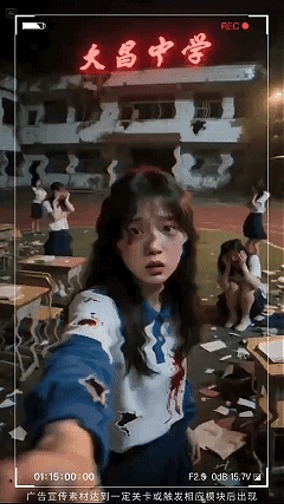
Conventional game advertising often spends valuable seconds introducing characters, explaining the setting, or demonstrating gameplay. Micro-horror can begin directly with an abnormal event: a strange sound inside a room, an elevator stopping on a floor that should not exist, a shadow appearing on a security camera, or an unsettling object suddenly entering an otherwise ordinary space.
These openings immediately create an unanswered question in the viewer's mind. Instead of asking the audience to understand the entire game first, the creative earns attention by making the audience wonder what happened and what will happen next.

Suspense-Driven Narrative Structure
Effective micro-horror advertising can operate like a miniature film. A character enters an uncomfortable situation, editing and sound steadily increase tension, and the creative ends before the audience receives a complete resolution.
This structure reduces the need to explain every gameplay detail. Curiosity itself carries the viewer forward. For mobile games, suspense can therefore become a direct conversion mechanism, particularly when the unanswered moment naturally leads into the game experience.

Environmental Storytelling
Horror becomes easier to relate to when its environment resembles a place the audience encounters in real life. Rental rooms, dormitories, old apartment blocks, elevators, abandoned hospitals, and public restrooms can all generate unease because viewers already understand how those spaces are supposed to feel.
This is particularly useful for localization in Vietnam. Rather than relying exclusively on expensive fantasy worlds, creative teams can turn familiar streets, buildings, rooms, objects, sounds, and everyday routines into culturally recognizable hooks.

AI-Generated Assets and the Uncanny Valley
Generative AI can help creative teams produce many visual variations at lower production cost. Horror is an unusual category in which some imperfections that would weaken another type of ad can sometimes contribute to the desired atmosphere.
Slightly distorted faces, unnatural motion, or subtly incorrect body proportions can reinforce an uncanny-valley feeling when they are intentionally incorporated into the concept. That does not mean low production quality should be accepted. Deliberately unsettling art direction and visibly poor assets are two different things, and creative teams still need clear quality boundaries.
Replace Trend-Chasing Intuition with Creative Intelligence
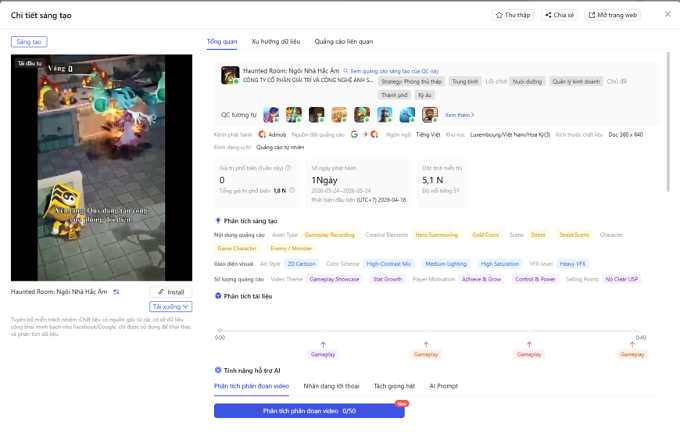
Tools such as SocialPeta can help UA teams inspect high-performing advertising patterns across creative motifs, environments, CTA formats, editing rhythms, and video structures.
The objective is not to duplicate a successful advertisement. Instead, teams should deconstruct its structure: determine which moment stops the scroll, which motif appears to support efficient acquisition, which environment can be adapted for Vietnamese audiences, and which recurring content signals are worth testing consistently across a campaign.
From China to Vietnam: A Rapidly Opening Market Window
Vietnam has many cultural ingredients that can support light-horror entertainment: supernatural folklore, ghost stories, urban legends, shared housing and dormitory environments, and a strong habit of consuming short-form digital content.
Until recently, many of these ingredients existed independently rather than developing into a recognizable wave within the local games industry. The emergence of micro-horror products in China, followed by more titles reaching Vietnamese audiences, gives publishers a clearer signal that demand may extend beyond isolated horror releases.
The opportunity is also broader than mobile games alone. PC indie games, livestreaming, short-form video, theatrical films, and entertainment IP are increasingly connected. For publishers, this makes micro-horror worth evaluating as a cross-platform content direction rather than only as a narrow mobile-game genre.
Vietnamese Horror Case Studies: Thần Trùng and Tai Ương
Thần Trùng: Local Culture as the Core of the Horror Experience
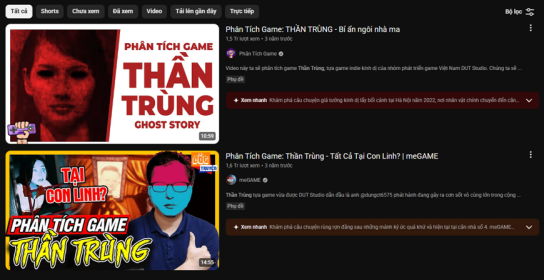
Vietnam has already produced an important local example in The Death | Thần Trùng, a Vietnamese psychological horror game from DUT Studio. The game takes place in Hanoi and uses highly recognizable Vietnamese urban environments as part of the experience.
Its strength is not limited to jump scares. Old collective housing, patterned floors, worn corridors, public loudspeakers, and other familiar details make the environment itself part of the tension. Players are not encountering a generic horror backdrop; they are recognizing spaces and sounds that belong to everyday Vietnamese life.
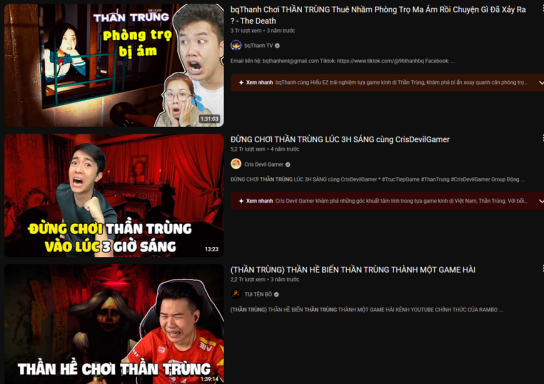
The original SocialPeta analysis also highlights the role of Vietnamese streamer communities around creators such as Độ Mixi, PewPew, and Xemesis. Horror provides many moments that are naturally suitable for livestream reactions, clips, commentary, and community sharing, creating opportunities for organic circulation in addition to paid acquisition.
The practical lesson is that localized horror with a clear concept, recognizable spaces, and highly reactable moments can activate a community in ways that standard paid-UA metrics do not fully capture. Fear is only one part of the appeal; atmosphere, curiosity, and entertainment value are equally important.
Multi-Platform IP Expansion: Tai Ương (The Scourge)
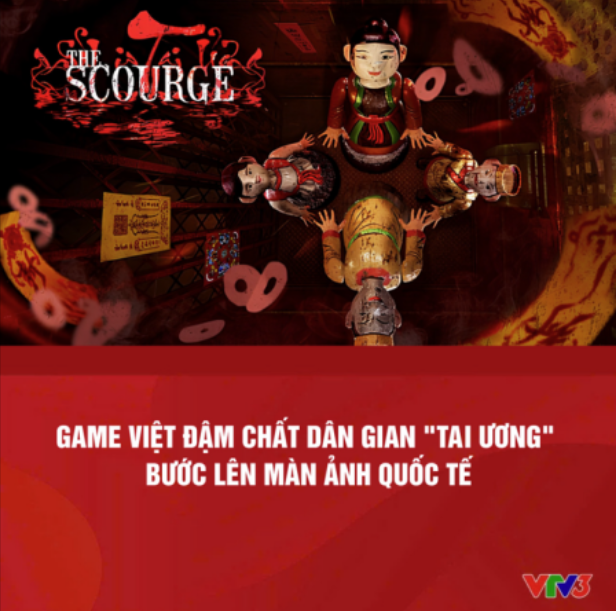
The Vietnamese horror opportunity is already moving beyond games. Tai Ương, known internationally as The Scourge, is built around Vietnamese supernatural imagery and a 1990s Saigon setting. Its development from game IP toward a feature-film adaptation demonstrates how strongly localized horror can support a wider entertainment property.
The Vietnamese horror game has developed from a local game concept into an IP attracting international film-industry attention.
By May 2026, industry reporting stated that the source game had passed 100,000 downloads and held a 94% positive Steam rating. The film adaptation was also taken to the Cannes Film Market, reinforcing the original article's argument that Vietnamese horror IP can travel beyond a single game platform.
This is strategically important for publishers. A locally rooted horror concept can generate value through gameplay, community discussion, livestreams, short-form content, film, and other forms of IP expansion instead of relying on one monetization channel.
The Opportunity for Localized Mobile Micro-Horror
Light-horror concepts are also appearing more frequently in casual mobile games. Funtap Games' experience publishing Haunted Room: Ngôi Nhà Hắc Ám provides a practical reference point for evaluating the category in Vietnam.
Downloads and revenue alone are not enough to understand the opportunity. Publishers should deconstruct player behavior at a more granular level: which hooks stop attention, which gameplay loops encourage a return session, which situations are most likely to be shared, and whether players respond more strongly when the surrounding world is localized to Vietnam.
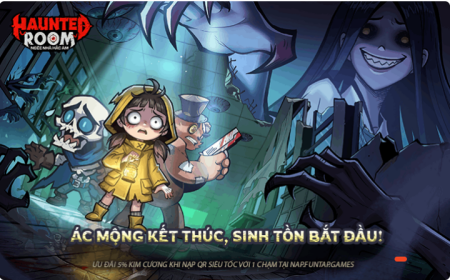
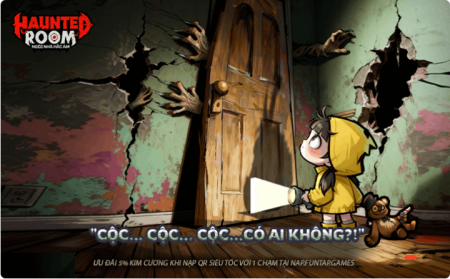
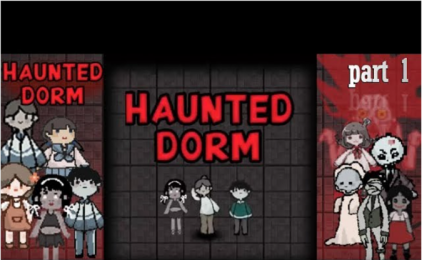
Haunted Dorm previously showed that room-defense gameplay and horror themes can work together for mobile audiences. Yet the Vietnamese market still has room for products whose horror identity is unmistakably local.
Student rental housing, apartment corridors, late-night street sounds, water spirits, figures at the end of narrow alleys, and other Vietnamese folklore or everyday motifs remain useful material for product and advertising experimentation.
That creates an interesting market vacancy for studios and publishers that want to test a culturally differentiated product without beginning with the production scope of a large, high-budget horror game. A moderate product budget combined with highly shareable creative material can provide a practical way to validate demand.
Frontline Insights and a Growth Framework for Funtap Games
Micro-horror should not be treated only as a temporary creative trend. Used systematically, it can become a product direction that creates differentiation at three levels: product sourcing, localized content, and growth operations.
For Funtap Games, the category can be approached as a growth vector that is tested, localized, and scaled through product discovery, market validation, localized advertising, and community operations.
- Establish a dedicated micro-horror product tracker. Monitor signals from Chinese games, WeChat Mini Games, Douyin, TikTok, Google Play, and Southeast Asian markets. The goal is to detect gameplay formats and themes that repeatedly show genuine growth rather than reacting to a single viral creative.
- Prioritize gameplay with proven casual reach. Room defense, idle mechanics, merge systems, match-3, and casual roguelike structures can provide a more scalable foundation than horror mechanics alone. Horror then operates as an emotional and creative layer on top of an accessible core loop.
- Build localization into the concept from the beginning. Localization should extend well beyond translated text or swapped artwork. Vietnamese environments, cultural motifs, sound design, narrative situations, character behavior, and advertising hooks should be considered from the concept stage.
- Build a reusable creative framework instead of isolated videos. One repeatable micro-horror structure is: Anomalous Signal → Character Reaction → Decision Making → Consequences → Cliffhanger. Teams can then create multiple variants for different audience segments without rebuilding the underlying creative logic every time.
- Treat streamers and community reactions as part of acquisition. Horror is naturally spectator-friendly. KOLs, streamers, short-video creators, and meme communities can therefore become an important part of the organic acquisition funnel rather than an activity separated from UA.
- Expand measurement beyond rigid media metrics. CPI, CTR, and CVR remain important, but micro-horror also benefits from measuring saves, shares, comments, completion rate, high-reaction motifs, retention associated with short-video exposure, and the speed at which content spreads through communities.
Micro-Horror Is a Content Proposition, Not Just a Genre
Signals from China and emerging Vietnamese examples point toward a broader growth principle: micro-horror does not need to sell extreme fear. Its stronger proposition is a compact emotional experience that is easy to understand, react to, and share.
For mobile games, scalability is therefore less about making every scene more frightening and more about balancing a moderately eerie atmosphere with intuitive gameplay, short sessions, and situations that players can easily retell to other people.
Horror can function as an emotional layer over many existing core systems, including merge, co-op, roguelike, idle, match-3, room-defense, and extraction mechanics. This allows studios to explore differentiation without always having to invent an entirely new gameplay architecture.
From a production perspective, that can improve R&D efficiency while giving creative teams clearer visual hooks for UA. It also fits an advertising environment in which the structure and content of the creative increasingly influence delivery signals.
The original analysis identifies the period from 2026 through the end of 2027 as an important opportunity window for Vietnam. If supernatural folklore, urban legends, and ordinary Vietnamese environments can be translated into short-session gameplay, immediate creative hooks, and highly shareable community content, publishers may be able to establish meaningful differentiation.
Funtap Games enters this opportunity with market research capabilities, practical publishing experience from Haunted Room: Ngôi Nhà Hắc Ám, and recognition at the Vietnam Game Awards 2026. That combination gives the company an opportunity not only to follow a trend, but to identify, validate, and commercialize emerging categories.
In that sense, micro-horror can follow a much broader trajectory: beginning as a scalable casual mobile concept, building a community around recognizable local content, and eventually developing into an entertainment IP with cross-platform potential.